
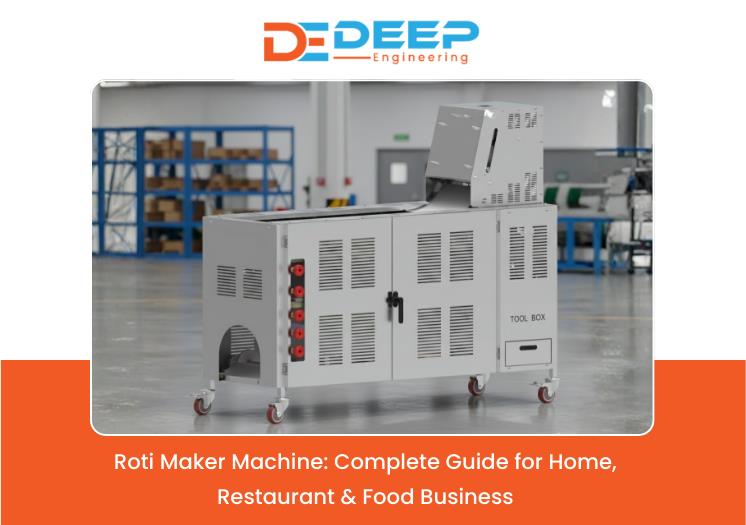
In India, rotis are not just food — they are daily comfort, tradition, and nutrition on every plate. But preparing hundreds of perfectly round, soft rotis every day is time-consuming and labor-intensive, especially for restaurants, food vendors, and large families.
This is exactly why the roti maker machine has become one of the most essential kitchen automation solutions in modern kitchens and commercial food businesses.
From homes to cloud kitchens, food carts to catering units, automation is transforming food preparation. Businesses today are adopting smart equipment like the automatic roti maker, laddu making machine, vegetable washing machine, and potato peeler machine to improve speed, hygiene, and profits.
In this complete guide, you’ll learn everything about roti machines — working process, types, benefits, buying tips, and why they’re becoming a must-have tool for every growing food business.
Why the Roti Maker Machine Is Becoming Essential Today
The demand for quick food service has increased dramatically. Whether it’s:
- Tiffin centers
- Mess kitchens
- Restaurants
- Catering services
- Food vans
- Street food businesses
Customers expect fast service without compromising taste.
Manual roti making creates problems:
- Inconsistent size & thickness
- Labor dependency
- Hygiene issues
- Slow production
- Worker fatigue
- High operating cost
A commercial roti maker machine solves all of these challenges.
It automates the entire process — pressing, roasting, and puffing — giving consistent rotis in seconds.
What Is a Roti Maker Machine?
A roti maker machine is a kitchen automation device that converts dough balls into perfectly cooked rotis using heat plates and pressing technology.
It can:
- Flatten dough automatically
- Cook evenly from both sides
- Maintain same thickness
- Produce multiple rotis continuously
Modern machines are designed for both domestic and industrial usage.
Types of Automatic Roti Maker Machines
1. Fully Automatic Roti Maker Machine for Home
Best for families and small kitchens.
Features
- Compact size
- Easy controls
- Minimal maintenance
- Low power consumption
Perfect for working couples, students, and elderly people who want fresh rotis daily without effort.
2. Semi-Automatic Roti Maker
Suitable for small restaurants and cafés.
Features
- Manual dough placement
- Automatic pressing & cooking
- Medium production capacity
3. Commercial Roti Maker Machine
Designed for bulk production environments.
Used in:
- Hostels
- Hotels
- Catering units
- Industrial kitchens
- Food vans
- Cloud kitchens
Production capacity: 500 – 2000+ rotis/hour
How an Automatic Roti Maker Works
The working process is simple but smartly engineered:
Step 1: Dough Feeding
Prepared dough balls are placed into the machine.
Step 2: Pressing
A food pressing machine mechanism flattens dough uniformly.
Step 3: Heating
High-temperature plates cook both sides evenly.
Step 4: Puffing
Steam pressure puffs the roti naturally — just like handmade.
Step 5: Ready to Serve
Hot, soft rotis come out continuously.
Benefits of Using a Roti Maker Machine
1. Saves Labor Cost
One operator can do the work of 4–6 workers.
2. Increases Production Speed
Produces rotis within seconds.
3. Maintains Hygiene
No hand contact reduces contamination.
4. Perfect Uniform Rotis
Same size, same weight, same taste every time.
5. Consistent Customer Satisfaction
Essential for restaurants & food vendors.
6. Business Scalability
You can handle peak-hour rush easily.
Why Food Businesses Are Switching to Automation
Modern food businesses are integrating multiple machines together:
- Laddu maker / laddu making machine for sweets
- Vegetable washing machine for hygiene
- Potato peeling machine for preparation
- Food pressing machine for dough shaping
- Roti maker machine for main meal production
Together, they form a complete automated kitchen setup.
This improves:
- Productivity
- Cleanliness
- Profit margins
- Customer service speed
Ideal Businesses That Need a Commercial Roti Maker Machine
Restaurants & Dhaba
Serve hundreds of customers daily with consistent quality.
Catering Services
Handle bulk wedding orders effortlessly.
Cloud Kitchens
Reduce staff dependency.
Tiffin Centers
Prepare meals faster during morning rush.
Food Vans & Food Carts
Perfect for mobile kitchens.
A professional Food Cart Manufacturer often integrates these machines into customized carts for high-efficiency operations.
Roti Maker Machine + Food Cart = Profitable Combination
Today, entrepreneurs are starting businesses using:
- Stainless steel food cart
- Mobile food van
- Multi-cuisine vending kiosks
Adding a roti machine inside a cart transforms it into a complete meal station.
You can sell:
- Roti sabzi
- Punjabi meals
- Combo thali
- Tiffin packs
This drastically improves daily revenue.
How It Helps Street Food Vendors Grow Faster
Traditional vendors depend on manpower and speed limitations.
But when installed inside a Food Van or Food Cart, the machine allows:
- Faster service
- More customers served
- Higher income per hour
Many vendors recover the equipment investment within months because they can serve 3x more customers daily.
Key Features to Check Before Buying a Roti Maker Machine
Build Material
Always choose food-grade stainless steel construction.
Heating System
Uniform heating plates prevent half-cooked rotis.
Capacity
Choose based on daily requirement.
| Usage | Recommended Capacity |
|---|---|
| Home | 50–100 rotis/day |
| Small café | 300–500 rotis/day |
| Restaurant | 800–1500 rotis/day |
| Catering | 2000+ rotis/day |
Power Consumption
Energy-efficient models reduce electricity cost.
Cleaning Ease
Removable plates & smooth surface help hygiene.
Maintenance Tips for Long Machine Life
- Clean plates after use
- Avoid excess wet dough
- Use recommended voltage
- Lubricate moving parts periodically
- Schedule servicing every 6 months
Proper care can make a machine last 8–12 years.
Cost vs Profit: Is It Worth It?
Let’s calculate a simple example.
Manual worker capacity: 80 rotis/hour
Machine capacity: 800 rotis/hour
Labor saving: 5 workers
Monthly salary saved: ₹50,000+ (approx)
Investment recovery: 3–6 months
This makes the roti machine one of the highest ROI kitchen investments.
Why Modern Kitchens Prefer Stainless Steel Equipment
Most professional kitchens now prefer:
- Stainless steel food cart
- Industrial washing machines
- Automatic cooking equipment
Because stainless steel:
- Is hygienic
- Rust-free
- Easy to clean
- Long-lasting
Complete Smart Kitchen Setup for Food Businesses
A professional automated setup may include:
- Roti maker machine
- Laddu making machine
- Vegetable washing machine
- Potato peeler machine
- Food pressing machine
- Storage counters
- Cooking burners
Such a setup enables a single outlet to function like a mini factory.
Choosing the Right Manufacturer Matters
A good equipment manufacturer provides:
- Custom design
- Durable construction
- After-sales support
- Installation guidance
- Business consultation
This is especially important for entrepreneurs starting a new food business.
FAQs
Yes. A fully automatic roti maker machine for home is compact and easy to operate for daily cooking.
Depending on the model, 500 to 2000+ rotis per hour.
Yes. Proper heating technology ensures soft, puffed rotis similar to handmade ones.
Absolutely. Many mobile kitchens integrate it successfully.
No. Basic cleaning and periodic servicing are enough.
Normal wheat flour dough works perfectly.
Modern machines are energy-efficient and cost-effective.
Final Thoughts
The food industry is rapidly moving toward automation. Customers expect quick service, hygiene, and consistent quality — and businesses that adopt technology grow faster.
A roti maker machine is no longer a luxury — it is becoming a necessity for:
- Restaurants
- Catering services
- Tiffin centers
- Food carts
- Cloud kitchens
- Modern homes
When combined with other equipment like laddu making machines, vegetable washers, and potato peelers, it transforms a traditional kitchen into a high-efficiency food production system.
If you’re planning to start or expand a food business, investing in automated equipment is one of the smartest decisions you can make today.
Contact Us: Deep Engineering