
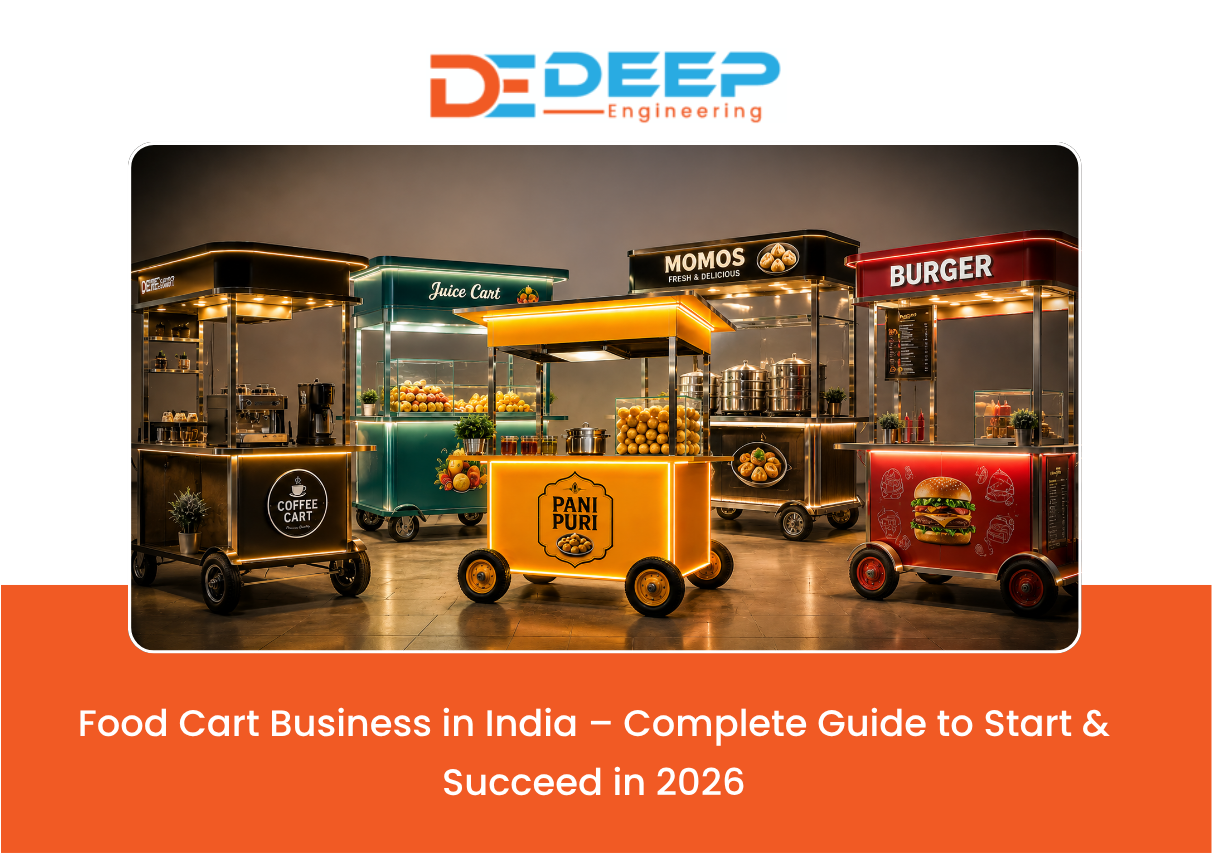
Starting a Food Cart Business in India has become one of the smartest ways to enter the food industry with low investment and high earning potential. Whether you are a first-time entrepreneur, a street food vendor, a homemaker, or a restaurant owner looking to expand, investing in a professionally designed Food Cart Manufacturer solution can help you build a successful business.
Unlike traditional restaurants, a Food Cart Business requires less capital, lower operational costs, and offers the flexibility to operate in high-footfall locations. With the growing demand for hygienic and mobile food solutions, the market is expected to grow significantly in 2026.
Choosing the right Food Cart Manufacturers is equally important. A high-quality cart improves hygiene, customer experience, operational efficiency, and brand image. Deep Engineering is one of India’s trusted manufacturers of premium food carts, mobile food vans, kiosks, and commercial food vending equipment, offering factory-direct pricing, food-grade materials, customization, and Pan India delivery.
What is a Food Cart Business?
A Food Cart Business is a mobile food vending business where food or beverages are prepared and sold from a portable or customized cart. Compared to restaurants or food trucks, it requires lower investment, lower operating costs, and offers greater flexibility.
Entrepreneurs looking for durable and professionally manufactured carts often invest in a premium Food Cart that can be customized according to their business requirements.
How Much Investment is Needed?
The average food cart business cost in India ranges between ₹1.5 lakh and ₹8 lakh, depending on the menu, equipment, customization, and business model.
Is Food Cart Business Profitable?
Yes. A successful Food Cart Business can generate attractive profit margins with relatively low operational costs. Many entrepreneurs recover their investment within 12 to 24 months through consistent sales and smart location selection.
What is a Food Cart Business?
A Food Cart Business is one of the fastest-growing business models in India’s food industry. Entrepreneurs sell food or beverages through a portable, customized, and professionally designed cart installed in commercial locations such as markets, colleges, office areas, railway stations, parks, tourist places, and events.
Modern food carts are equipped with storage cabinets, cooking stations, sinks, water tanks, lighting, branding panels, and food-grade stainless steel construction.
Businesses looking for premium quality often choose a Stainless steel food cart because of its durability, hygiene, corrosion resistance, and professional appearance.
Why Start a Food Cart Business in India?
India’s street food culture is growing rapidly. Consumers increasingly prefer hygienic, affordable, and freshly prepared meals, creating significant opportunities for entrepreneurs.
Some major benefits include:
- Low startup investment
- High demand
- Easy mobility
- Faster ROI
- Lower business risk
- Easy scalability
Many entrepreneurs begin by purchasing a professionally manufactured Food Cart Manufacturer in India solution that supports their menu, branding, and workflow requirements.
Latest Food Cart Industry Growth (2026)
India’s food vending industry continues to expand due to rapid urbanization, digital payments, food delivery integration, and growing demand for affordable meals.
Cities including Ahmedabad, Rajkot, Surat, Vadodara, Bhavnagar, Himmatnagar, Jaipur, Indore, Delhi NCR, Gurugram, Madhya Pradesh, and Uttar Pradesh are witnessing increasing demand for customized food carts.
Entrepreneurs searching for a Food Cart Manufacturer in Ahmedabad, Food Cart Manufacturer in Rajkot, Food Cart Manufacturer in Surat, Food Cart Manufacturer in Vadodara, Food Cart Manufacturer in Gujarat, Food Cart Manufacturer in Rajasthan, Food Cart Manufacturer in Jaipur, Food Cart Manufacturer in Indore, Food Cart Manufacturer in Delhi NCR, Food Cart Manufacturer in Gurugram, Food Cart Manufacturer in Madhya Pradesh, and Food Cart Manufacturer in Uttar Pradesh increasingly prefer Deep Engineering because of its custom manufacturing, premium build quality, and Pan India delivery network.
Benefits of Starting a Food Cart Business
Launching a Food Cart Business offers several practical advantages.
Low Investment
Compared to restaurants, food carts require significantly less capital, making them ideal for startups and first-time entrepreneurs.
High Mobility
A food cart can be relocated based on customer demand, festivals, and seasonal opportunities.
Better Branding
An attractive Food Cart Design helps attract customers while improving brand recognition.
Business Expansion
Entrepreneurs can gradually scale from one cart to multiple outlets or even upgrade to a Food Van for larger operations.
Types of Food Cart Businesses
Popular food cart concepts include:
- Tea Cart
- Coffee Cart
- Burger Cart
- Sandwich Cart
- Pizza Cart
- Juice Cart
- Ice Gola Cart
- Fast Food Cart
- Momos Cart
- Panipuri Cart
- Waffle Cart
- Pan Counter
- Mobile Food Van
Businesses planning larger commercial operations can compare the latest food van price before expanding.
Best Food Cart Business Ideas
Fast Food Cart
Fast food remains one of India’s highest-demand food categories.
A professionally designed Fast food stall helps improve cooking efficiency and customer service.
Momos Cart
Momos continue to dominate India’s street food market.
A customized Momo cart provides efficient steaming, organized storage, and better hygiene.
Panipuri Cart
Panipuri remains one of India’s most popular street food businesses.
A premium Panipuri Cart helps vendors maintain cleanliness while enhancing customer experience.
Waffle Cart
Dessert businesses continue to grow rapidly among young consumers.
A customized Waffle Cart is perfect for malls, food festivals, and commercial areas.
Pan Counter
Premium mouth fresheners and fusion pan concepts are becoming increasingly popular.
A professionally manufactured pan counter creates an attractive display while improving workflow.
Why Choosing the Right Manufacturer Matters
Your food cart is the foundation of your business. Investing in premium food carts for sale ensures better hygiene, durability, efficiency, and long-term profitability.
Whether you’re starting a tea cart, fast food business, dessert kiosk, or expanding into a mobile kitchen, choosing an experienced Food Cart Manufacturer like Deep Engineering gives you access to:
- Food-grade stainless steel construction
- Factory-direct pricing
- Custom branding
- Modern designs
- Smart storage
- Pan India delivery
- After-sales support
- Professional manufacturing
Food Cart Business Cost in India (2026)
One of the biggest advantages of starting a Food Cart Business is that it requires significantly less investment than opening a restaurant or purchasing a food truck. The food cart business cost in India depends on factors such as the type of food you plan to sell, the level of customization, equipment, branding, and your business location.
If you are purchasing a professionally built Food Cart from a trusted manufacturer, you can choose from basic, semi-customized, or fully customized models based on your budget and business goals.
Estimated Food Cart Business Investment
| Investment Component | Estimated Cost (₹) |
|---|---|
| Food Cart Purchase | ₹80,000 – ₹3,50,000+ |
| Kitchen Equipment | ₹30,000 – ₹2,00,000 |
| Initial Raw Materials | ₹20,000 – ₹75,000 |
| Licenses & Registrations | ₹5,000 – ₹30,000 |
| Branding & Signage | ₹10,000 – ₹50,000 |
| Marketing | ₹10,000 – ₹40,000 |
| Working Capital | ₹50,000 – ₹2,00,000 |
| Estimated Total Investment | ₹1.5 Lakh – ₹8 Lakh+ |
Pro Tip: Investing in a high-quality Stainless steel food cart reduces maintenance costs and improves hygiene, durability, and customer confidence over the long term.
How Much Does a Food Cart Business Cost in India?
A Food Cart Business in India typically requires an investment of ₹1.5 lakh to ₹8 lakh, depending on the type of cart, kitchen equipment, menu, branding, licenses, and working capital. A professionally manufactured food cart provides better durability, food safety, and long-term return on investment.
Food Cart Business Investment by Business Type
| Business Type | Approx. Investment | Difficulty | Profit Potential |
|---|---|---|---|
| Tea Cart | ₹1.5–2.5 Lakh | Easy | High |
| Coffee Cart | ₹2–4 Lakh | Medium | High |
| Momo cart | ₹2–4 Lakh | Medium | High |
| Panipuri Cart | ₹1.5–3 Lakh | Easy | High |
| Waffle Cart | ₹3–6 Lakh | Medium | High |
| Juice Cart | ₹2–4 Lakh | Easy | Medium |
| Fast food stall | ₹3–7 Lakh | Medium | Very High |
| Pizza Cart | ₹4–8 Lakh | Medium | Very High |
| Food Van | ₹8–20 Lakh+ | Advanced | Very High |
Food Cart vs Food Truck
Choosing between a food cart and a food truck depends on your investment capacity and business model.
| Feature | Food Cart | Food Truck |
|---|---|---|
| Initial Investment | Low | High |
| Mobility | High | Medium |
| Licenses | Easier | More Complex |
| Operating Cost | Low | High |
| Staff Required | 1–3 | 3–6 |
| Maintenance | Low | High |
| ROI | Faster | Moderate |
| Ideal For | Startups & Small Businesses | Large Mobile Kitchens |
If you are planning a larger mobile kitchen, compare the latest food van price before making your investment.
Food Cart vs Restaurant
Many entrepreneurs compare a food cart with opening a traditional restaurant. Here’s how they differ.
| Factor | Food Cart | Restaurant |
|---|---|---|
| Investment | ₹1.5–8 Lakh | ₹20 Lakh–₹1 Crore+ |
| Monthly Rent | Low/None | High |
| Staff Requirement | 1–3 | 8–25 |
| Break-even Time | 12–24 Months | 24–48 Months |
| Business Risk | Low | High |
| Expansion | Easy | Costly |
| Flexibility | High | Limited |
For most first-time entrepreneurs, a Food Cart Business offers a lower-risk and faster path to profitability.
Food Cart Business Plan (Step-by-Step)
A solid food cart business plan increases your chances of long-term success. Instead of focusing only on food, build a complete strategy covering operations, marketing, finances, and customer experience.
1. Choose Your Food Concept
Select a niche based on local demand.
Popular options include:
- Tea & Coffee
- Fast Food
- Momos
- Pizza
- Sandwiches
- Burgers
- Chinese
- South Indian
- Chaat
- Fresh Juice
- Ice Gola
- Waffles
2. Research Your Target Customers
Identify:
- Students
- Office employees
- Families
- Tourists
- Working professionals
- Event visitors
Understanding your audience helps you decide your menu, pricing, and business location.
3. Select the Right Cart
The design of your cart directly impacts efficiency and customer attraction.
Choose a professionally manufactured Food Cart that includes:
- Food-grade stainless steel
- Smart storage
- Display counter
- Wash basin
- Utility shelves
- Branding panels
- Lighting
- Custom dimensions
4. Calculate Your Budget
Include:
- Cart cost
- Kitchen equipment
- Licenses
- Raw materials
- Packaging
- Marketing
- Emergency funds
Avoid spending your entire budget on the cart alone. Keep enough working capital for at least the first three to six months.
5. Develop Your Menu
Keep the menu:
- Simple
- Profitable
- Easy to prepare
- Consistent in quality
Avoid offering too many items in the beginning.
6. Branding
Your cart should clearly display:
- Business name
- Logo
- Menu board
- Contact number
- QR payment codes
- Social media handles
A professional Food Cart Design improves visibility and builds trust with customers.
Licenses Required for a Food Cart Business
Operating legally helps build customer confidence and prevents unnecessary penalties. The exact requirements may vary by state and municipality.
License Checklist
| License | Required | Purpose |
|---|---|---|
| FSSAI License | ✅ Yes | Food Safety Compliance |
| Municipal Trade License | ✅ Yes | Local Business Permission |
| Shop & Establishment Registration | ✅ If Applicable | Business Registration |
| GST Registration | If Applicable | Tax Compliance |
| Fire NOC | Depends on Setup | Fire Safety |
| Local Vendor Permission | As Required | Location Approval |
FSSAI License
An FSSAI license is one of the most important legal requirements for any food vending business in India. It demonstrates that your business follows food safety and hygiene standards, helping build trust with customers.
Benefits include:
- Legal compliance
- Customer confidence
- Better brand reputation
- Eligibility for online food platforms (where applicable)
GST Registration
GST registration is required if your business meets the applicable turnover threshold or falls under categories where registration is mandatory. Consult a qualified tax professional to determine whether your business needs GST registration.
Municipal Trade License
Most cities require vendors to obtain a municipal or local trade license before operating a food cart in public or designated commercial areas.
Fire Safety Approval
If your food cart uses LPG cylinders, grills, fryers, or other cooking equipment, local authorities may require compliance with applicable fire safety norms.
Shop & Establishment Registration
Depending on your state and business model, Shop & Establishment registration may also be required. Check your state’s regulations before starting operations.
Why Buy from a Trusted Food Cart Manufacturer?
The quality of your cart directly influences hygiene, efficiency, and customer perception. Choosing an experienced Food Cart Manufacturer ensures you receive a business-ready solution built for long-term commercial use.
Many entrepreneurs across Ahmedabad, Rajkot, Surat, Vadodara, Bhavnagar, Himmatnagar, Gujarat, Rajasthan, Jaipur, Indore, Delhi NCR, Gurugram, Madhya Pradesh, and Uttar Pradesh trust Deep Engineering for:
- Factory-direct pricing
- Food-grade stainless steel construction
- Custom cart manufacturing
- Modern Food Cart Design
- Smart storage solutions
- Attractive branding options
- Pan India delivery
- Reliable after-sales support
Whether you’re launching your first street food startup or expanding your existing business, partnering with experienced Food Cart Manufacturers can help you start with confidence and build a profitable venture.
Food Cart Equipment Checklist
The right equipment plays a major role in the success of your Food Cart Business. Investing in quality food cart equipment improves productivity, maintains food hygiene, and delivers a better customer experience.
When purchasing a professional Food Cart, ensure it includes all the essential features required for your menu and daily operations.
Essential Food Cart Equipment Checklist
| Equipment | Purpose | Required |
|---|---|---|
| Food-grade Stainless Steel Counter | Hygienic food preparation | ✅ |
| Cooking Range / Burner | Cooking food | ✅ |
| LPG Cylinder Compartment | Safe gas storage | ✅ |
| Sink with Water Tank | Hand & utensil washing | ✅ |
| Storage Cabinets | Organized storage | ✅ |
| Ingredient Containers | Food safety | ✅ |
| Exhaust Hood (if required) | Smoke control | Optional |
| LED Lights | Night operation | ✅ |
| Branding Panel | Business promotion | ✅ |
| Menu Display Board | Customer convenience | ✅ |
| Cash Drawer / POS | Billing | ✅ |
| QR Code Stand | UPI Payments | ✅ |
| Dustbin | Cleanliness | ✅ |
| Fire Extinguisher | Safety | Recommended |
Expert Tip: A professionally manufactured Stainless steel food cart offers better durability, easier cleaning, rust resistance, and a more premium appearance compared to ordinary materials.
What Equipment Is Required for a Food Cart Business?
A successful Food Cart Business requires food-grade stainless steel counters, cooking equipment, water tanks, storage cabinets, display panels, lighting, QR payment facilities, safety equipment, and branding. The exact setup depends on the type of food you plan to serve.
Step-by-Step Food Cart Setup Guide
Setting up your food cart correctly from day one improves efficiency, customer satisfaction, and profitability.
Step 1: Select the Right Food Cart
Choose a professionally designed Food Cart that matches your menu, expected customer volume, and available workspace.
Look for:
- Food-grade stainless steel
- Easy mobility
- Smart storage
- Custom branding
- Water tank
- Wash basin
- Spacious working area
- Attractive lighting
Businesses looking for premium quality often choose Deep Engineering because of its custom manufacturing capabilities and Pan India delivery.
Step 2: Purchase Commercial Equipment
Install equipment based on your food concept.
Examples:
- Tea machine
- Coffee machine
- Deep fryer
- Griddle
- Steamers
- Pizza oven
- Refrigeration unit
- Juice blender
- Induction cooktop
- Display warmer
Only purchase equipment that directly supports your menu to avoid unnecessary investment.
Step 3: Organize Your Workspace
An efficient layout helps reduce waiting time.
Keep separate sections for:
- Cooking
- Preparation
- Serving
- Storage
- Washing
- Packaging
A professionally planned Food Cart Design maximizes available space while improving workflow.
Step 4: Maintain Food Hygiene
Customer trust depends heavily on cleanliness.
Follow these best practices:
- Wear gloves and hair caps.
- Wash hands regularly.
- Clean surfaces frequently.
- Store raw materials properly.
- Use covered ingredient containers.
- Dispose of waste responsibly.
Step 5: Display Your Brand
Your food cart should clearly display:
- Business name
- Logo
- Menu
- Pricing
- UPI QR Code
- Phone number
- Social media handles
Strong branding helps customers remember your business and recommend it to others.
How to Choose the Best Business Location
Location is one of the biggest factors influencing the success of a Food Cart Business.
Choose areas with:
- High foot traffic
- Easy accessibility
- Good visibility
- Limited competition
- Safe parking
- Adequate lighting
Best Locations in India
- College campuses
- IT parks
- Corporate offices
- Railway stations
- Bus stands
- Shopping complexes
- Residential societies
- Tourist attractions
- Public parks
- Industrial areas
- Weekly markets
- Exhibition grounds
- Food festivals
Cities such as Ahmedabad, Rajkot, Surat, Vadodara, Bhavnagar, Himmatnagar, Jaipur, Indore, Delhi NCR, Gurugram, Madhya Pradesh, and Uttar Pradesh offer excellent opportunities for entrepreneurs due to increasing demand for hygienic and affordable street food.
Marketing Tips for a Food Cart Business
Even the best food requires effective marketing. A combination of offline and digital marketing can help attract new customers and build long-term loyalty.
Offline Marketing
Simple offline strategies can create a strong local presence.
- Attractive signage
- Uniform branding
- Free tasting events
- Introductory offers
- Referral discounts
- Festival promotions
- Loyalty cards
- Local event participation
A visually appealing Food Cart Design naturally attracts more walk-in customers.
Optimize Your Google Business Profile
A Google Business Profile helps local customers discover your food cart when searching online.
Optimize your profile with:
- Business name
- Accurate location
- Phone number
- Business hours
- High-quality photos
- Customer reviews
- Updated menu
Encourage satisfied customers to leave positive reviews, as they improve local search visibility and customer trust.
Instagram Marketing
Instagram is one of the most effective platforms for promoting a Food Cart Business.
Post regularly:
- Food preparation videos
- Customer reactions
- Behind-the-scenes content
- Daily specials
- Festival offers
- New menu launches
Use local hashtags to reach nearby customers.
WhatsApp Marketing
WhatsApp is ideal for repeat business.
Use it to:
- Share daily menus
- Send promotional offers
- Accept advance orders
- Collect customer feedback
- Notify customers about special events
Create a broadcast list to communicate with regular customers without creating multiple groups.
Facebook Marketing
Facebook remains valuable for reaching local communities.
Share:
- Food photos
- Customer testimonials
- Event participation
- Special discounts
- New product launches
Join local community groups to increase your visibility.
YouTube Shorts & Reels
Short-form videos receive high engagement.
Create content such as:
- Food preparation
- Customer reviews
- Before-and-after cart setup
- Hygiene practices
- Menu highlights
- Day-in-the-life videos
Consistent posting can significantly improve brand awareness.
Pricing Strategy
Pricing should balance profitability with customer expectations.
Consider:
- Raw material cost
- Packaging cost
- Labor
- Utility expenses
- Local competition
- Customer purchasing power
Avoid competing only on price. Focus on:
- Better quality
- Cleanliness
- Faster service
- Attractive presentation
- Consistent taste
Customers often pay more for a hygienic and reliable experience.
Customer Retention Tips
Acquiring new customers is important, but retaining existing customers is even more profitable.
Improve retention by:
- Maintaining consistent taste
- Offering loyalty rewards
- Remembering repeat customers
- Responding politely
- Introducing seasonal specials
- Using fresh ingredients
- Providing quick service
- Keeping your cart clean
Happy customers become repeat buyers and recommend your business to others.
Food Cart Business Profit Margin
One of the biggest reasons entrepreneurs choose a Food Cart Business is its attractive earning potential.
What Is the Profit Margin in a Food Cart Business?
A well-managed Food Cart Business can achieve gross profit margins of approximately 40% to 70%, depending on the menu, ingredient costs, pricing strategy, location, and daily customer footfall. Efficient operations and repeat customers can further improve profitability.
Factors That Affect Profit Margin
- Menu pricing
- Food cost
- Daily sales volume
- Location
- Waste management
- Staff expenses
- Operational efficiency
Items such as tea, coffee, momos, sandwiches, waffles, and panipuri often deliver healthy margins due to relatively low ingredient costs.
Food Cart ROI (Return on Investment)
A professionally managed food cart business typically offers faster ROI than many traditional food businesses because of its lower setup and operating costs.
Average ROI Timeline
| Business Type | Expected ROI |
|---|---|
| Tea Cart | 8–12 Months |
| Coffee Cart | 12–18 Months |
| Panipuri Cart | 10–16 Months |
| Momo cart | 12–18 Months |
| Waffle Cart | 15–24 Months |
| Fast food stall | 18–24 Months |
| Food Van | 24–36 Months |
Note: Actual ROI varies based on location, pricing, demand, operational efficiency, and overall business management.
Why Your Food Cart Quality Matters
Your cart is more than just equipment—it represents your brand. Investing in professionally manufactured food carts for sale helps you deliver a better customer experience while reducing maintenance and repair costs.
Entrepreneurs across Ahmedabad, Rajkot, Surat, Vadodara, Bhavnagar, Himmatnagar, Gujarat, Rajasthan, Jaipur, Indore, Delhi NCR, Gurugram, Madhya Pradesh, and Uttar Pradesh choose Deep Engineering because they offer:
- Factory-direct pricing
- Food-grade stainless steel construction
- Custom-built solutions
- Modern Food Cart Design
- Commercial-grade quality
- Pan India delivery
- Custom branding
- Dedicated after-sales support
Whether you’re starting a tea stall, fast food outlet, dessert business, or expanding into a larger Food Van, working with an experienced Food Cart Manufacturer gives your business a strong foundation for long-term growth.
Common Mistakes to Avoid When Starting a Food Cart Business
Starting a Food Cart Business is relatively simple, but avoiding common mistakes can save you time, money, and unnecessary stress. Many first-time entrepreneurs focus only on the menu and overlook essential aspects such as location, equipment quality, licensing, and customer experience.
Here are some of the most common mistakes and how to avoid them.
1. Choosing the Wrong Location
Even the best food cannot generate good sales if your cart is placed in a low-footfall area.
Avoid This By:
- Researching customer traffic.
- Observing competitors.
- Testing locations during different times of the day.
- Choosing areas near colleges, offices, parks, markets, or transport hubs.
A strategic location can significantly improve your daily sales and shorten your food cart ROI.
2. Buying a Low-Quality Food Cart
Many entrepreneurs try to save money by purchasing cheaply made carts. However, poor-quality materials often lead to frequent repairs, rust, hygiene issues, and a poor customer impression.
Instead, invest in a professionally manufactured Stainless steel food cart that offers:
- Food-grade construction
- Long-term durability
- Easy maintenance
- Better hygiene
- Professional appearance
A quality cart is an investment that supports your business for years.
3. Ignoring Legal Requirements
Operating without the required licenses can result in penalties or interruptions to your business.
Before launching, obtain the necessary approvals, including:
- FSSAI License
- Municipal Trade License
- Shop & Establishment Registration (where applicable)
- GST Registration (if applicable)
- Local authority permissions
Following legal requirements builds customer confidence and protects your business.
4. Offering Too Many Menu Items
Many beginners make the mistake of offering an extensive menu from the start.
This often leads to:
- Increased food wastage
- Higher inventory costs
- Slower service
- Inconsistent quality
Start with a focused menu of high-demand items. As your customer base grows, you can gradually introduce new products.
5. Compromising on Hygiene
Today’s customers expect clean and hygienic food preparation.
Maintain high standards by:
- Cleaning your cart regularly.
- Wearing gloves and hairnets.
- Using fresh ingredients.
- Storing food safely.
- Providing a clean serving area.
A professionally designed Food Cart Design also helps improve workflow and cleanliness.
6. Ignoring Branding
A plain cart may blend into the crowd, while a well-branded cart stands out and attracts attention.
Your cart should include:
- Business logo
- Brand colors
- Attractive menu board
- QR payment codes
- Contact details
- Social media handles
Strong branding creates trust and encourages repeat business.
7. Poor Customer Service
Friendly interactions often matter as much as food quality.
Simple practices such as greeting customers, serving quickly, and responding politely can turn first-time visitors into loyal customers.
Real Success Example
From a Small Street Food Startup to a Growing Business
A young entrepreneur in Ahmedabad wanted to start a fast-food business with limited capital. Instead of renting a commercial shop, they invested in a professionally manufactured Food Cart.
They focused on:
- A simple menu
- High-quality ingredients
- Consistent taste
- Clean presentation
- Digital payments
- Social media promotion
- Excellent customer service
Within the first year, the business built a loyal customer base and expanded operations by introducing catering for local events and corporate gatherings.
While every business grows at its own pace, this example highlights how careful planning, quality equipment, and customer-focused operations can create long-term opportunities.
How to Choose the Best Food Cart Manufacturer in India
Selecting the right manufacturer is one of the most important decisions you’ll make. Your food cart is the foundation of your business, and its quality directly affects efficiency, hygiene, customer experience, and maintenance costs.
1. Food-Grade Materials
Choose manufacturers that use high-quality stainless steel and food-safe materials.
A durable Stainless steel food cart offers:
- Better hygiene
- Rust resistance
- Easy cleaning
- Long service life
2. Custom Manufacturing
Every food business has unique requirements.
Whether you sell tea, coffee, burgers, momos, pizza, waffles, or panipuri, your cart should be customized to suit your workflow.
Look for manufacturers that offer:
- Custom dimensions
- Equipment integration
- Smart storage
- Branding options
- Utility layouts
3. Modern Design
A visually appealing cart attracts more customers.
A professional Food Cart Design should include:
- LED lighting
- Premium finish
- Eye-catching branding
- Efficient workspace
- Ergonomic layout
4. Manufacturing Experience
Choose a manufacturer with proven expertise in commercial food vending solutions.
Experienced Food Cart Manufacturers understand industry requirements and can recommend the right setup for your business.
5. Pan India Delivery
If you’re located outside Gujarat, ensure your manufacturer provides secure delivery and installation support across India.
This is especially important for entrepreneurs in:
- Ahmedabad
- Rajkot
- Surat
- Vadodara
- Bhavnagar
- Himmatnagar
- Rajasthan
- Jaipur
- Indore
- Delhi NCR
- Gurugram
- Madhya Pradesh
- Uttar Pradesh
6. After-Sales Support
A reliable manufacturer should provide:
- Technical guidance
- Maintenance support
- Spare parts availability
- Customer assistance
Good after-sales service minimizes downtime and keeps your business running smoothly.
Why Choose Deep Engineering?
When investing in a Food Cart Business, partnering with the right manufacturer can make a significant difference. Deep Engineering is a trusted Food Cart Manufacturer known for delivering durable, hygienic, and fully customizable food carts for businesses across India.
Premium Quality
Every cart is built using food-grade stainless steel and commercial-quality materials to ensure long-term durability and compliance with hygiene standards.
Custom Manufacturing
From Momo cart and Panipuri Cart to Waffle Cart, Fast food stall, and Food Van, every solution is tailored to your menu and operational needs.
Factory-Direct Pricing
Buying directly from the manufacturer helps reduce unnecessary middlemen costs while ensuring excellent value for your investment.
Attractive Designs
Professionally designed carts combine functionality with aesthetics, helping businesses attract customers and build a strong brand presence.
Smart Storage & Efficient Layout
Every cart is designed to maximize workspace, improve storage, and support smooth day-to-day operations.
Pan India Delivery
Whether you’re in Gujarat, Rajasthan, Delhi NCR, Madhya Pradesh, Uttar Pradesh, or any other region, Deep Engineering delivers customized food carts across India.
Reliable After-Sales Support
The company offers ongoing customer assistance, helping entrepreneurs maintain their carts and operate with confidence.
FAQs
A Food Cart Business is a mobile food vending business where entrepreneurs sell food or beverages from a customized cart. It offers lower investment, flexible operations, and high earning potential compared to restaurants.
The food cart business cost in India generally ranges from ₹1.5 lakh to ₹8 lakh, depending on the cart type, equipment, customization, menu, and working capital.
Yes. A well-managed Food Cart Business can achieve gross profit margins of 40% to 70%, depending on food costs, pricing strategy, location, and customer demand.
A food cart requires lower investment, has lower operating costs, and is easier to manage. A food truck offers more cooking space and menu flexibility but generally requires higher capital and maintenance.
Deep Engineering offers factory-direct pricing, food-grade stainless steel construction, custom designs, smart storage, attractive branding, Pan India delivery, and reliable after-sales support for entrepreneurs across India.
Yes. Most professional manufacturers offer customization based on your menu, equipment, branding, storage needs, lighting, and workspace requirements.
Final Thoughts
A Food Cart Business is one of the most practical and scalable opportunities for aspiring entrepreneurs in India. With relatively low startup costs, flexible operations, and growing demand for hygienic street food, it provides an excellent pathway to financial independence.
Success depends on more than just serving great food. Choosing the right location, maintaining hygiene, delivering consistent quality, and investing in a professionally manufactured Food Cart are all essential for long-term growth.
Whether you’re launching your first street food startup or expanding an existing business, working with an experienced Food Cart Manufacturer in India can help you build a strong foundation for success.
Ready to Start Your Food Cart Business?
Turn your business idea into reality with a customized, commercial-grade food cart from Deep Engineering.
Explore premium food carts for sale, modern Food Cart Design options, and business-ready solutions designed for startups, franchises, restaurants, and entrepreneurs across India.
Contact Deep Engineering today for:
- ✔ Factory-direct pricing
- ✔ Food-grade stainless steel construction
- ✔ Fully customized food carts
- ✔ Smart storage solutions
- ✔ Modern commercial designs
- ✔ Pan India delivery
- ✔ Professional manufacturing
- ✔ Dedicated after-sales support
Start your Food Cart Business with confidence and build a brand that stands out in India’s growing food industry.
Contact Us: Deep Engineering