
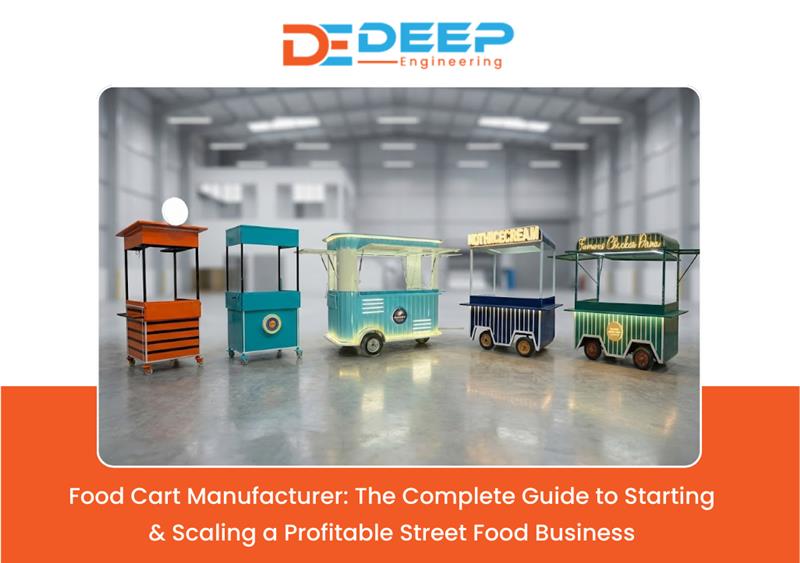
Street food is no longer just a roadside trend — it’s a booming micro-entrepreneur economy. Across India and globally, thousands of people are choosing small mobile food businesses over traditional restaurants because they offer lower investment, faster ROI, and flexible operations.
But here’s the reality:
Your success doesn’t start with recipes.
It starts with the right equipment — especially the right Food Cart Manufacturer.
A well-designed cart increases hygiene, attracts customers, improves workflow, and helps you serve faster. A poorly designed one does the opposite — slowing you down and reducing profits.
In this detailed guide, you’ll learn how to choose the right manufacturer, understand different cart types, compare costs, and discover practical business tips that real vendors use every day.
Why Choosing the Right Food Cart Manufacturer Matters
Not all carts are the same. Many street vendors buy cheap carts and later realize:
- Rusting surfaces
- Poor wheel balance
- No storage planning
- Difficult cleaning
- Health inspection problems
- Low customer trust
A professional manufacturer designs carts for daily business operations, not just appearance.
A reliable manufacturer like Deep Engineering focuses on:
- Hygienic food-grade materials
- Strong mobility for Indian roads
- Practical working layout
- Custom branding & display
- Business-ready utility planning
The difference?
You don’t just buy a cart — you buy a business setup.
Types of Food Carts for Different Businesses
Different Food Cart require different layouts. Choosing the right cart type directly impacts efficiency and customer experience.
1. Stainless Steel Food Cart (All-Purpose)
Best for: Multi-item food stalls & growing vendors
Features:
- Easy cleaning
- Rust resistant
- Long lifespan
- Professional appearance
Ideal for:
- Fast Food Stall
- Tea & snack counter
- Juice & shake business
2. Momos Cart / Momo Cart
Momos Cart / Momo Cart Perfect for high-demand evening business.
Key design elements:
- Steamer section
- Chutney storage
- Display counter
- Heat control space
Why specialized design matters:
Momo vendors serve quickly during rush hours — workflow matters more than size.
3. Panipuri Cart
Panipuri cart India’s most popular street food requires hygiene visibility.
Important components:
- Water tank system
- Ingredient containers
- Glass display
- Waste collection space
Customers trust vendors more when they see organized preparation.
4. Dosa Cart
Cooking requires space management and heat safety.
Includes:
- Tawa mounting
- Batter storage
- Gas cylinder chamber
- Serving counter
A poorly designed dosa cart causes overheating and slow service.
5. Waffle Cart
Waffle Cart Modern dessert business with premium branding value.
Design priorities:
- Attractive lighting
- Display shelves
- Electrical appliance support
Best for malls, events & night markets.
6. Mini Food Cart
Small investment — big potential.
Suitable for:
- College areas
- Startups
- Side income
Advantages:
- Lower food van price alternative
- Easy parking
- Low running cost
7. Cycle Food Cart & E Rickshaw Food Cart
cycle food cart Mobile vendors who travel across locations prefer these.
Benefits:
- No fixed rent
- Wider reach
- Morning + evening shift flexibility
8. Food Van
Food Van For large menu operations.
Compared to a cart:
| Feature | Food Cart | Food Van |
|---|---|---|
| Cost | Low | High |
| Space | Limited | Large |
| Mobility | Easy | Moderate |
| License | Simple | More regulations |
Food Cart Design Ideas That Increase Sales
Food Cart Design ideas Customers eat with their eyes first.
Modern food vendors now use visual marketing through cart design.
Smart design elements
- LED warm lighting
- Brand logo panel
- Glass ingredient display
- Color psychology (red/yellow boosts appetite)
- Height-optimized counter
Workflow optimization tips
- Raw → Cook → Serve flow
- Separate cash & cooking area
- Hidden storage drawers
A good Food Cart Manufacturer plans the business workflow — not just the structure.
Equipment That Can Be Integrated Into Your Cart
Many successful vendors integrate small machines to speed up production.
Popular add-ons
Preparation Equipment
Sweet & Snack Business
Support Counters
- pan counter
- preparation side table
These tools help you serve more customers during peak hours — directly increasing revenue.
How Much Does a Food Cart Cost? (Food Van Price Comparison)
Investment varies based on material, size, and customization.
| Setup Type | Approx Investment | Suitable For |
|---|---|---|
| Mini food cart | Low | Beginners |
| Stainless steel food cart | Medium | Regular vendors |
| Custom food cart | Medium-High | Brand builders |
| E rickshaw food cart | High | Mobile operations |
| Food Van | Highest | Full-time entrepreneurs |
Instead of choosing cheapest, choose highest return per day.
A ₹20,000 cheaper cart can cost ₹2,00,000 in lost business over time.
What Makes a Professional Food Cart Manufacturer Different?
Not all Food Cart Manufacturer design carts for real working conditions.
Professional manufacturers provide:
1. Hygiene Compliance
Smooth welding
Rounded edges
Washable surfaces
2. Business-Based Layout
Cooking zone
Serving zone
Storage zone
3. Durability
Heavy gauge steel
Balanced wheels
Weather resistant finish
4. Customization
Brand colors
Menu boards
Lighting
5. Growth Support
Upgrade options
Add-on equipment
Repair service
This turns a cart into a scalable business system.
Practical Tips Before Buying a Food Cart
Always ask these questions
- Where will I park daily?
- How many customers per hour?
- Gas or electric cooking?
- Morning or evening business?
- Menu expansion in future?
Vendor mistakes to avoid
❌ Buying decorative but impractical carts
❌ Ignoring storage
❌ No water/waste system
❌ Underestimating rush hour workflow
How a Good Cart Improves Daily Profit
Let’s compare two vendors selling the same food.
| Factor | Poor Cart | Professional Cart |
|---|---|---|
| Serving speed | Slow | Fast |
| Hygiene trust | Low | High |
| Repeat customers | Few | Many |
| Daily sales | Average | High |
Your equipment becomes your silent salesman.
Why Many Street Vendors Prefer Custom Carts
Every food business is unique.
A pani puri seller, waffle maker, and dosa chef cannot use the same layout.
Customization helps in:
- Faster cooking
- Cleaner presentation
- Higher perceived value
Customers are willing to pay more at organized stalls.
Scaling From Street Vendor to Brand
Many successful chains started with one cart.
Growth path:
1 cart → 3 carts → franchise model
Standardized carts help maintain brand identity.
Consistency builds trust — trust builds revenue.
FAQs
Stainless steel is best because it is hygienic, rust-resistant, easy to clean, and accepted by health authorities.
You can start small with a mini food cart or expand with a food van depending on menu and location.
Yes. It allows you to serve multiple locations daily — increasing exposure and sales.
Momos cart, panipuri cart, and fast food stalls are highly profitable due to repeat demand.
Customization helps optimize workflow and improves customer trust — strongly recommended for long-term growth.
Yes. Equipment like roti maker machine, laddu making machine, and potato peeling machine can be integrated to improve efficiency.
Final Thoughts: Your Cart Is Your Business Foundation
In the street food industry, location matters, taste matters — but equipment matters first.
A reliable Food Cart Manufacturer doesn’t just build a cart.
They help you:
- Start faster
- Serve efficiently
- Maintain hygiene
- Attract customers
- Scale confidently
Whether you plan a momo cart, dosa cart, waffle cart, or a full food van — investing in a professional setup converts effort into profit.
Because in this business…
The cart you choose today decides the income you earn tomorrow.
Contact Us: Deep Engineering