
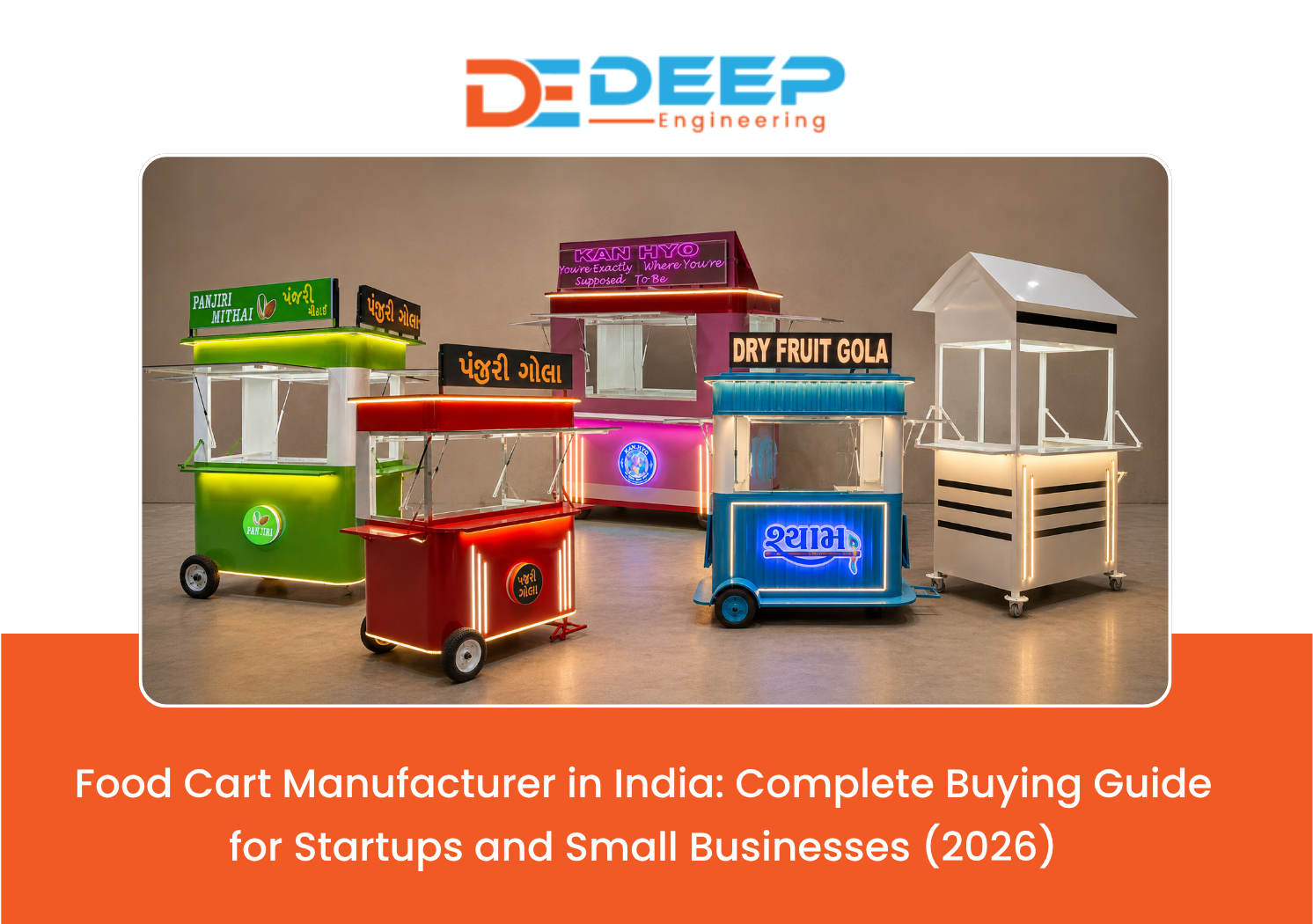
Starting a food business is one of the most affordable ways to become an entrepreneur in India. Whether you want to sell momos, tea, waffles, panipuri, burgers, sandwiches, or fresh juices, choosing the right Food Cart Manufacturer in India is one of the most important decisions you will make. A well-built food cart not only supports daily operations but also creates a strong first impression, improves hygiene, and helps attract more customers.
The Indian street food market continues to grow as consumers seek quick, affordable, and hygienic meals. This growth has increased demand for professionally designed food carts that combine mobility, durability, and attractive branding. Today, startups, cafés, cloud kitchens, franchise businesses, women entrepreneurs, and MSMEs are investing in customized food carts to enter the food industry with lower investment than traditional restaurants.
However, buying a food cart is more than comparing prices. The quality of fabrication, material selection, storage layout, mobility, customization options, and manufacturer experience all influence your long-term business success. Investing in a high-quality cart from the beginning can reduce maintenance costs, improve customer trust, and support future business expansion.
This comprehensive Food Cart Buying Guide explains everything you need to know before purchasing a commercial food cart in 2026. From different cart types and materials to estimated investments and buying tips, you’ll find practical insights to make a confident decision. Whether you are based in Ahmedabad, Surat, Rajkot, Vadodara, Jaipur, Delhi NCR, Lucknow, Indore, Kanpur, Varanasi, or anywhere in India, this guide will help you choose a food cart that matches your business goals.
What is the best Food Cart Manufacturer in India?
The best Food Cart Manufacturers in India offers durable food-grade stainless steel carts, professional fabrication, customization options, attractive branding, easy mobility, and dependable after-sales support. Before purchasing, compare material quality, storage capacity, mobility, design, hygiene standards, warranty, and manufacturer experience. A well-designed food cart helps improve operational efficiency, customer experience, and long-term return on investment.
Why Food Cart Businesses Are Growing in India
India’s food industry has experienced remarkable growth over the past few years. Consumers increasingly prefer quick, affordable meals served from clean and attractive food carts. This shift has opened opportunities for entrepreneurs to launch businesses with relatively low investment while reaching customers in high-footfall areas.
Unlike opening a restaurant, a food cart requires significantly less capital, fewer operational expenses, and offers greater flexibility. Entrepreneurs can relocate to festivals, business districts, educational institutions, exhibitions, and residential communities based on customer demand.
Several factors are driving the popularity of food cart businesses:
- Low startup investment compared to restaurants
- Faster business setup
- Easy mobility between locations
- High demand for street food
- Growing preference for hygienic food preparation
- Attractive branding opportunities
- Lower operational costs
- Suitable for first-time entrepreneurs
- Scalable business model
- Strong profit potential
Many successful food brands in India started with a single food cart before expanding into multiple outlets or franchise models. This demonstrates how a professionally designed mobile food vending solution can become the foundation of a long-term business.
Cities such as Ahmedabad, Surat, Rajkot, Vadodara, Jaipur, Delhi NCR, Lucknow, Indore, Kanpur, and Varanasi are witnessing rapid growth in food startups. Increasing urbanization, rising disposable income, and changing consumer lifestyles continue to create demand for innovative street food concepts.
What Is a Food Cart?
A food cart is a portable commercial unit designed to prepare, display, and serve food in different locations. It provides entrepreneurs with an affordable and flexible alternative to opening a permanent restaurant or café.
Modern food carts are carefully designed to include food preparation areas, storage compartments, cooking equipment space, serving counters, sinks (where applicable), branding panels, lighting, and wheels for mobility.
Today’s food carts are built for much more than mobility. They are engineered to support efficient operations while creating an attractive customer experience.
A professionally fabricated food cart generally includes:
- Food-grade stainless steel worktops
- Storage cabinets
- Shelving
- Lockable compartments
- Heavy-duty wheels
- Electrical provisions
- Gas cylinder space
- Display counters
- Waterproof roofing
- Customized branding panels
- LED lighting
- Waste management options
Many businesses now prefer customized food carts because they can be tailored to specific menu requirements and operational workflows.
If you’re planning to invest in a new vending setup, you can Explore Food Carts through the Deep Engineering product collection.
Types of Food Carts
Different food businesses require different layouts, equipment, and storage solutions. Selecting the right cart depends on your menu, available space, target customers, and operational requirements.
Momo Cart
A momo cart is designed for steaming, serving, and storing momos efficiently. It usually includes a steaming compartment, insulated storage, serving counter, and ingredient organization space.
Best suited for:
- Steamed momos
- Fried momos
- Chinese snacks
- Street food startups
Ideal for busy commercial areas, educational institutions, and evening food markets.
Waffle Cart
Waffle businesses continue to grow across shopping malls, exhibitions, colleges, and food festivals. A waffle cart includes dedicated work surfaces, waffle machine space, topping storage, ingredient organization, and attractive branding.
Suitable for:
- Belgian waffles
- Bubble waffles
- Dessert kiosks
- Ice cream combinations
Panipuri Cart
A professionally designed panipuri cart improves hygiene while increasing serving speed.
Common features include:
- Multiple pani containers
- Ingredient storage
- Serving shelves
- Waste collection
- Easy cleaning surfaces
This design helps vendors maintain cleanliness while handling high customer volumes.
Tea & Coffee Cart
Tea remains one of India’s largest beverage businesses. Modern tea carts support fast service while providing organized storage for ingredients, kettles, cups, and accessories.
Ideal for:
- Tea stalls
- Coffee vendors
- Corporate parks
- Railway stations
- College campuses
Fast Food Cart
Fast food carts are among the most versatile mobile vending solutions.
They can accommodate:
- Burgers
- Sandwiches
- Rolls
- Pav Bhaji
- Dosa
- Pizza
- Pasta
- Chinese cuisine
- Snacks
Their flexible layout allows businesses to adapt menus over time.
Ice Gola Cart
Ice gola remains a seasonal favorite across India. Modern carts include insulated ice storage, syrup organization, hygienic serving counters, and attractive display options.
These carts are especially popular during summer seasons, fairs, and public events.
Juice Cart
Fresh juice businesses continue to grow as health-conscious consumers seek natural beverages.
Juice carts often feature:
- Blender space
- Fruit display
- Refrigerated storage options
- Sink provisions
- Waste bins
- Ingredient organization
Their clean presentation enhances customer confidence and supports efficient service.
Push Cart
A push cart is a practical option for entrepreneurs who frequently move between locations. Designed for easy transportation, it is suitable for markets, exhibitions, residential areas, schools, parks, and local events.
Push carts are commonly used for:
- Snacks
- Tea
- Corn
- Chaat
- Ice cream
- Seasonal products
Their compact design makes them an affordable entry point for first-time business owners.
Food Cart Types Comparison
| Food Cart Type | Best For | Mobility | Customization | Maintenance | Expected ROI |
|---|---|---|---|---|---|
| Momo Cart | Momo Business | High | High | Low | High |
| Waffle Cart | Dessert Business | Medium | High | Low | High |
| Panipuri Cart | Street Food | High | Medium | Very Low | High |
| Tea & Coffee Cart | Beverage Business | High | High | Low | High |
| Fast Food Cart | Multi-Cuisine | Medium | Very High | Medium | Very High |
| Juice Cart | Fresh Juice | High | Medium | Low | High |
| Ice Gola Cart | Seasonal Business | High | Medium | Very Low | Medium to High |
| Push Cart | Mobile Selling | Very High | Medium | Very Low | Medium |
Choosing the Right Food Cart Starts with the Right Manufacturer
Selecting the right cart is only one part of the investment. Equally important is choosing an experienced manufacturer that understands food business operations, uses durable materials, and offers customization based on your menu and workflow.
If you’re comparing different models, you can Browse Food Cart Collection to explore a wide range of professionally designed food carts for startups, street vendors, cafés, and commercial businesses.
Food Cart Buying Guide
Buying a food cart is a business investment that directly affects your daily operations, customer experience, and long-term profitability. While many buyers focus only on the initial cost, experienced entrepreneurs evaluate the overall value a cart offers over several years.
A professionally manufactured food cart should be durable, hygienic, easy to maintain, and designed around your menu. It should also support future growth, whether you plan to add new products, expand to multiple locations, or build a recognizable brand.
Checklist Before Buying a Food Cart
Before finalizing your purchase, evaluate the following:
- Define your food menu and cooking requirements.
- Estimate your daily customer volume.
- Measure the available vending space.
- Check local municipal and FSSAI requirements.
- Decide between a stationary or mobile setup.
- Compare stainless steel and mild steel construction.
- Review storage and workspace capacity.
- Ensure proper ventilation and lighting.
- Confirm wheel quality and mobility.
- Ask about warranty and after-sales support.
- Check customization options for branding.
- Compare manufacturer experience and previous projects.
Following this checklist helps you avoid costly mistakes and ensures your investment supports long-term business growth.
How to Choose the Right Food Cart
The right food cart depends on your menu, expected customer footfall, available space, mobility needs, and future expansion plans. Choose a manufacturer that offers quality fabrication, customization, and reliable support rather than selecting solely based on price.
1. Choose According to Your Food Business
Every food category requires a different layout.
For example:
- Momo business needs steamers and insulated storage.
- Tea & coffee stalls require organized beverage preparation space.
- Panipuri vendors need hygienic ingredient compartments.
- Fast food businesses require larger worktops and cooking areas.
- Juice businesses need fruit storage and blender provisions.
Buying a cart designed specifically for your menu improves workflow and service speed.
2. Prioritize Food-Grade Materials
Food comes into direct contact with work surfaces. Using food-grade stainless steel reduces contamination risks and simplifies cleaning.
Look for:
- Food-grade SS 304 work surfaces where applicable
- Smooth welding
- Rust-resistant finishes
- Easy-to-clean edges
- Durable countertops
3. Think Beyond Today’s Business
Many startups begin with one product and gradually expand.
For example:
A tea seller may later introduce coffee, sandwiches, or snacks.
Choosing a custom food cart manufacturer allows space for future equipment without replacing the entire cart.
4. Evaluate Storage Capacity
Well-organized storage improves efficiency.
Important storage areas include:
- Dry ingredients
- Packaging materials
- Raw materials
- Cleaning supplies
- Gas cylinder compartment
- Cash drawer
- Utility shelves
Proper storage reduces clutter and speeds up service.
5. Check Mobility Features
If your business operates in multiple locations, mobility becomes essential.
Choose:
- Heavy-duty wheels
- Reliable braking system
- Strong chassis
- Comfortable pushing handles
- Balanced weight distribution
A well-designed mobile food vending cart is easier to transport and safer to operate.
6. Focus on Branding
Customers often judge quality before tasting the food.
Professional branding elements include:
- Attractive color schemes
- Illuminated signage
- Logo placement
- Digital menu boards
- Product graphics
- Premium finishing
An attractive cart creates stronger visual appeal and improves brand recall.
7. Consider Long-Term Maintenance
Low-maintenance carts reduce operating costs.
Ask your manufacturer about:
- Spare parts availability
- Easy cleaning
- Corrosion resistance
- Replaceable components
- Warranty coverage
Investing in quality fabrication today can save significant repair costs in the future.
Food Van Price Guide in India (2026)
Many entrepreneurs compare a food cart with a food van before starting their business. While food vans provide larger working areas and greater mobility over longer distances, they also require a significantly higher investment and additional operating expenses.
For many startups and MSMEs, a professionally fabricated food cart offers a practical balance between affordability, mobility, and business potential.
Estimated Food Van Price Guide in India
| Vehicle/Setup Type | Estimated Price Range (₹) | Best For |
|---|---|---|
| Basic Push Food Cart | ₹35,000 – ₹70,000 | New vendors |
| Standard Stainless Steel Food Cart | ₹70,000 – ₹1,50,000 | Street food businesses |
| Customized Commercial Food Cart | ₹1,20,000 – ₹2,50,000+ | Premium startups |
| Small Food Van | ₹4,00,000 – ₹8,00,000 | Mobile food business |
| Fully Customized Food Van | ₹8,00,000 – ₹18,00,000+ | Franchise & premium brands |
| Food Truck | ₹10,00,000 – ₹30,00,000+ | Large-scale operations |
Note: Prices are indicative and vary depending on size, materials, fabrication quality, equipment, customization, branding, and optional accessories.
Food Cart vs Food Van
A food cart is ideal when you want:
- Lower startup costs
- Faster business launch
- Easier parking
- Lower maintenance
- Flexible vending locations
- Lower operating expenses
A food van may be more suitable if you:
- Travel long distances regularly
- Need extensive kitchen equipment
- Serve larger menus
- Operate at major events or corporate locations
For many first-time entrepreneurs, a premium food cart provides an excellent starting point with lower financial risk and the flexibility to scale later.
You can View Food Cart Models to compare different configurations and customization options.
Stainless Steel vs Mild Steel Comparison
Choosing the right material affects durability, hygiene, maintenance, and the overall lifespan of your food cart.
| Feature | Stainless Steel | Mild Steel |
|---|---|---|
| Durability | Excellent | Good |
| Rust Resistance | Very High | Requires protective coating |
| Hygiene | Excellent | Moderate |
| Cleaning | Easy | Moderate |
| Maintenance | Low | Higher |
| Appearance | Premium | Basic |
| Food Safety | Excellent | Depends on coating |
| Weather Resistance | High | Moderate |
| Lifespan | Longer | Shorter |
| Initial Cost | Higher | Lower |
| Long-Term Value | Excellent | Moderate |
Which Material Should You Choose?
Choose Stainless Steel if you want:
- Long-term durability
- Premium appearance
- Better hygiene
- Lower maintenance
- Improved customer confidence
- Professional branding
Choose Mild Steel if you:
- Have a limited initial budget
- Need a basic vending setup
- Plan to upgrade in the future
- Can maintain protective coatings regularly
While mild steel may reduce upfront costs, stainless steel often proves more economical over time due to its durability and lower maintenance requirements.
Food Cart Materials Explained
The quality of materials used in food cart design and fabrication directly impacts safety, performance, and lifespan.
Stainless Steel
Food-grade stainless steel is widely preferred for commercial food carts because it is:
- Corrosion resistant
- Hygienic
- Easy to sanitize
- Durable
- Professional in appearance
It is especially suitable for food preparation areas and serving counters.
Mild Steel
Mild steel offers structural strength and affordability. It is commonly used for frames and support structures but requires proper surface treatment to prevent corrosion.
Aluminium
Aluminium is lightweight and naturally resistant to corrosion.
Advantages include:
- Easy mobility
- Lower overall weight
- Good weather resistance
However, it may not provide the same structural strength as steel in heavy-duty applications.
Laminates and ACP Panels
Exterior panels made from laminates or aluminium composite panels (ACP) improve aesthetics and provide opportunities for branding.
Benefits include:
- Modern appearance
- Easy cleaning
- Weather resistance
- Custom colors and graphics
Tempered Glass
Many modern food kiosks and display counters use tempered glass for:
- Product visibility
- Customer confidence
- Elegant presentation
- Easy cleaning
Heavy-Duty Wheels
Mobility depends on wheel quality.
Look for:
- Industrial-grade castor wheels
- Locking brakes
- Smooth rotation
- Load-bearing capacity
High-quality wheels improve safety and ease of movement, especially in busy commercial areas.
Food Cart Design & Fabrication Guide
Professional food cart design and fabrication is more than assembling metal sheets. It involves understanding food preparation workflows, ergonomics, customer interaction, and long-term durability.
A well-fabricated cart should allow vendors to work efficiently while maintaining cleanliness and presenting an attractive appearance.
Key Elements of Good Food Cart Fabrication
Ergonomic Workspace
A practical layout minimizes unnecessary movement, making it easier to prepare and serve food quickly.
Structural Strength
A strong frame supports daily use, transportation, and varying weather conditions without compromising stability.
Smart Storage
Dedicated compartments for ingredients, utensils, packaging, and utilities help keep the workspace organized.
Electrical Integration
Many modern carts include provisions for:
- LED lighting
- Electrical sockets
- Fans
- Water pumps
- POS systems
- Refrigeration units
Proper electrical planning enhances functionality and convenience.
Ventilation
For carts with cooking equipment, adequate ventilation improves comfort and safety by reducing heat buildup and smoke.
Branding Integration
Professional fabrication should include space for:
- Logos
- Brand colors
- Menu displays
- Promotional graphics
- LED signboards
Strong branding helps attract attention and build customer recognition.
Modern Food Cart Design Ideas
Today’s customers expect more than good food—they notice presentation, cleanliness, and overall visual appeal. Modern food cart designs combine functionality with aesthetics to create memorable customer experiences.
Minimalist Stainless Steel Design
Clean lines, polished finishes, and simple layouts project professionalism while making maintenance easier.
Industrial Street Food Style
Exposed metal finishes paired with wooden accents create a trendy, urban look that suits burgers, sandwiches, and gourmet street food concepts.
Premium Café-Style Cart
Ideal for coffee, waffles, desserts, and beverages, these carts often feature elegant lighting, branded panels, and organized display areas.
Fully Branded Mobile Cart
A customized exterior with vibrant graphics, illuminated signage, and consistent brand colors turns the cart into a moving advertisement and strengthens brand identity.
Eco-Friendly Design
Many entrepreneurs now incorporate sustainable elements such as energy-efficient LED lighting, reusable storage solutions, and recyclable materials to appeal to environmentally conscious customers.
Whether you choose a simple push cart or a fully customized commercial unit, thoughtful design and quality fabrication play a vital role in customer experience, operational efficiency, and long-term business success.
How to Choose a Food Cart Manufacturer
Choosing the right Food Cart Manufacturer in India is just as important as selecting the right cart model. A reliable manufacturer delivers consistent quality, understands food business requirements, and provides support even after the purchase. While a lower price may seem attractive, poor fabrication can lead to frequent repairs, downtime, and higher maintenance costs.
Before making your decision, evaluate the manufacturer using the following criteria.
1. Manufacturing Experience
Experience often reflects a manufacturer’s understanding of different food businesses. A company that has built carts for tea stalls, momo outlets, juice bars, fast food counters, and franchise brands is more likely to recommend practical layouts and durable solutions.
Ask questions such as:
- How many years have you been manufacturing food carts?
- Which industries do you serve?
- Can you customize carts for specific menus?
- Do you have completed project examples?
An experienced food cart fabrication company can help you avoid design mistakes that may only become apparent after your business starts operating.
2. Fabrication Quality
The quality of fabrication directly affects durability and safety.
Look for:
- Precision welding
- Smooth finishing
- Strong structural frame
- Durable paint or polishing
- Proper edge finishing
- Quality hardware and fittings
A professionally fabricated cart not only lasts longer but also creates a better impression on customers.
3. Material Standards
Not all steel used in food carts is the same.
A reputable stainless steel food cart manufacturer will explain:
- Where stainless steel is used
- Which grade is suitable for food-contact surfaces
- Frame construction materials
- Rust protection methods
- Surface finishing options
Transparent communication about materials is a sign of a trustworthy manufacturer.
4. Customization Capabilities
Every food business has unique operational requirements.
A dependable custom food cart manufacturer should be able to modify:
- Cart dimensions
- Counter height
- Storage layout
- Cooking equipment placement
- Lighting
- Branding panels
- Electrical fittings
- Utility compartments
Customization ensures your cart supports your workflow instead of forcing you to adapt to a standard design.
5. After-Sales Support
Support after delivery is often overlooked.
Ask whether the manufacturer provides:
- Spare parts
- Technical assistance
- Maintenance guidance
- Warranty
- Future modifications
- Additional accessories
Reliable support helps protect your investment over time.
6. Customer Reviews and Portfolio
A manufacturer’s previous work provides valuable insight into quality and consistency.
Review:
- Project photographs
- Customer testimonials
- Business clients
- Product variety
- Industry experience
Seeing completed carts can help you visualize your own setup and evaluate workmanship.
Why Ahmedabad Is Becoming India’s Food Cart Manufacturing Hub
Ahmedabad has emerged as one of India’s leading centers for food carts manufacturing. The city is known for its strong engineering capabilities, skilled workforce, advanced fabrication facilities, and well-developed supply chain.
Manufacturers based in Ahmedabad serve businesses across Gujarat and throughout India, including Rajasthan, Delhi NCR, Madhya Pradesh, Uttar Pradesh, and many other states.
Several factors contribute to this growth.
Strong Manufacturing Ecosystem
Ahmedabad has a long history of industrial manufacturing, making it easier to source quality raw materials and fabrication components.
Skilled Fabrication Professionals
The city is home to experienced welders, fabricators, engineers, and designers who specialize in commercial vending solutions.
Efficient Logistics
From Ahmedabad, food carts can be transported efficiently to cities such as:
- Surat
- Rajkot
- Vadodara
- Bhavnagar
- Himmatnagar
- Jaipur
- Delhi NCR
- Indore
- Lucknow
- Kanpur
- Varanasi
This enables manufacturers to serve customers across India with timely deliveries.
Growing Startup Culture
The rise of food startups and small businesses has encouraged manufacturers to develop more innovative and customizable cart designs, meeting the evolving needs of entrepreneurs.
As a result, many businesses searching for a food cart manufacturer in Ahmedabad choose the city for its combination of engineering expertise, customization capabilities, and competitive pricing.
Why Choose Deep Engineering
When investing in a commercial food cart, partnering with an experienced manufacturer can make a significant difference. Deep Engineering has established itself as a trusted manufacturer by focusing on quality fabrication, practical designs, and customer-oriented solutions for businesses across India.
Some of the key strengths include:
Wide Product Range
Deep Engineering manufactures a variety of mobile vending solutions, including:
- Food carts
- Mobile food vans
- Food kiosks
- Street food carts
- Tea and coffee carts
- Momo carts
- Waffle carts
- Panipuri carts
- Juice carts
- Fast food carts
- Ice gola carts
- Customized vending units
This wide portfolio allows entrepreneurs to choose solutions that match their business model and future growth plans.
If you’re comparing different options, you can Explore Food Carts here.
Custom Design Solutions
Every food business has different operational requirements.
Deep Engineering offers customization for:
- Cart dimensions
- Layout planning
- Equipment placement
- Branding graphics
- Lighting
- Storage
- Utility compartments
- Mobility features
This helps businesses create efficient workspaces while maintaining a professional appearance.
Focus on Quality
Each cart is designed with attention to durability, hygiene, and ease of maintenance. Features such as food-grade work surfaces, organized storage, and attractive finishes contribute to a better customer experience and long-term value.
Business-Oriented Approach
Instead of offering one-size-fits-all products, the company works with startups, MSMEs, cafés, franchise businesses, educational institutions, and food entrepreneurs to recommend solutions that suit their operational needs.
Benefits of Stainless Steel Food Carts
Stainless steel has become the preferred material for commercial food carts because it combines durability with hygiene and a professional appearance.
Excellent Hygiene
Smooth stainless steel surfaces are easy to clean and sanitize, helping maintain better food safety standards.
Long Service Life
With proper care, stainless steel carts can remain in good condition for many years, reducing replacement costs.
Low Maintenance
Unlike materials that require regular repainting or corrosion treatment, stainless steel generally needs only routine cleaning.
Better Customer Confidence
A clean and polished cart creates a positive impression and reassures customers about food hygiene.
Attractive Appearance
Modern stainless steel finishes complement professional branding and help businesses stand out in competitive markets.
Weather Resistance
Stainless steel performs well under varying weather conditions, making it suitable for outdoor vending in different parts of India.
Higher Long-Term Value
Although the initial investment may be higher than mild steel, lower maintenance and longer durability often result in better overall value.
Common Buying Mistakes to Avoid
Many first-time entrepreneurs unknowingly make purchasing decisions that increase long-term costs.
Avoid these common mistakes.
Buying Only on Price
The cheapest cart may require frequent repairs, reducing profitability over time.
Instead, evaluate quality, durability, and support.
Ignoring Future Expansion
Choose a layout that allows your menu and equipment to grow as your business expands.
Choosing Poor Quality Materials
Low-quality materials can rust quickly, become difficult to clean, and reduce customer confidence.
Overlooking Storage
Insufficient storage affects workflow and slows customer service.
Ignoring Branding
Your food cart acts as a mobile advertisement.
Professional branding helps attract attention and differentiate your business from competitors.
Not Verifying Manufacturer Experience
Always ask about completed projects, customization capabilities, and customer support before placing an order.
Real Customer Success Examples
Example 1: Momo Startup in Ahmedabad
A first-time entrepreneur in Ahmedabad upgraded from a basic pushcart to a customized stainless steel momo cart with organized steaming and storage sections. The improved workflow reduced preparation time during peak hours, while the professional appearance attracted more walk-in customers and supported steady business growth.
Example 2: Panipuri Vendor in Surat
A panipuri vendor replaced an aging cart with a modern stainless steel unit featuring enclosed ingredient storage and dedicated serving compartments. Customers appreciated the cleaner presentation, leading to greater trust, repeat visits, and stronger daily sales.
Example 3: Waffle Startup in Jaipur
A dessert startup in Jaipur invested in branded waffle carts designed with dedicated equipment space and eye-catching graphics. As brand recognition increased, the business expanded to multiple locations using similarly customized carts, creating a consistent customer experience across outlets.
Example 4: Tea Vendor in Vadodara
A tea entrepreneur introduced a professionally branded tea cart with LED lighting, organized storage, and a modern serving counter. The improved visibility and attractive design helped draw more footfall during morning and evening rush hours, strengthening the brand’s presence in a competitive market.
FAQs
1. Which is the best material for a food cart?
Food-grade stainless steel is generally preferred because it offers excellent hygiene, corrosion resistance, durability, and easier maintenance compared to many other materials.
2. What is the average food cart price in India?
Prices vary depending on size, material, customization, and equipment. Basic carts typically start from around ₹35,000, while premium customized commercial food carts can exceed ₹2.5 lakh.
3. Can a food cart be customized?
Yes. Most professional manufacturers offer customization for dimensions, storage, equipment placement, branding, lighting, and utility requirements.
4. Is stainless steel better than mild steel?
For long-term commercial use, stainless steel generally provides better hygiene, lower maintenance, and greater durability. Mild steel may be suitable for businesses with limited initial budgets.
5. How long does it take to manufacture a food cart?
Production timelines depend on the complexity of the design and customization. Standard models are usually completed faster than fully customized carts.
6. Are food carts suitable for franchise businesses?
Yes. Customized food carts help franchise businesses maintain a consistent brand identity while supporting efficient operations across multiple locations.
7. Can food carts include branding?
Absolutely. Manufacturers can incorporate logos, brand colors, illuminated signboards, graphics, and menu displays to create a professional appearance.
8. Is a food cart a good investment for startups?
For many entrepreneurs, food carts offer lower startup costs, greater flexibility, and the opportunity to test business ideas before investing in larger premises.
9. What should I look for in a food cart manufacturer?
Evaluate manufacturing experience, material quality, fabrication standards, customization options, warranty, customer reviews, and after-sales support before making a decision.
10. Why are customized food carts becoming more popular?
Customized carts improve workflow, maximize storage, strengthen branding, and allow businesses to design layouts that match their specific menu and operational needs.
Conclusion
Choosing the right Food Cart Manufacturer in India is about more than purchasing equipment—it’s about building a strong foundation for your business. A thoughtfully designed food cart enhances operational efficiency, supports food safety, strengthens your brand image, and helps create a better customer experience.
As India’s food startup ecosystem continues to expand across Ahmedabad, Surat, Rajkot, Vadodara, Jaipur, Delhi NCR, Indore, Lucknow, Kanpur, Varanasi, and other cities, investing in a durable and professionally fabricated cart can position your business for sustainable growth. Rather than focusing only on the lowest price, consider long-term value, quality materials, customization options, and dependable after-sales support.
Whether you are launching your first street food venture or expanding an established brand, selecting the right manufacturing partner today can reduce maintenance costs, improve daily operations, and support future scalability.
Ready to Start Your Food Business?
If you’re looking for professionally designed food carts that combine durability, hygiene, customization, and practical functionality, explore the range of solutions offered by Deep Engineering Food Cart Manufacturer.
Whether you need a momo cart, waffle cart, panipuri cart, tea cart, fast food cart, juice cart, or a fully customized mobile food vending cart, choosing a solution tailored to your business can help you launch with greater confidence.
Browse the latest collection and compare available models here:
Browse Food Cart Collection.
Invest wisely, choose quality from the beginning, and build a food business that’s ready to grow in 2026 and beyond.
Contact Us: Deep Engineering