
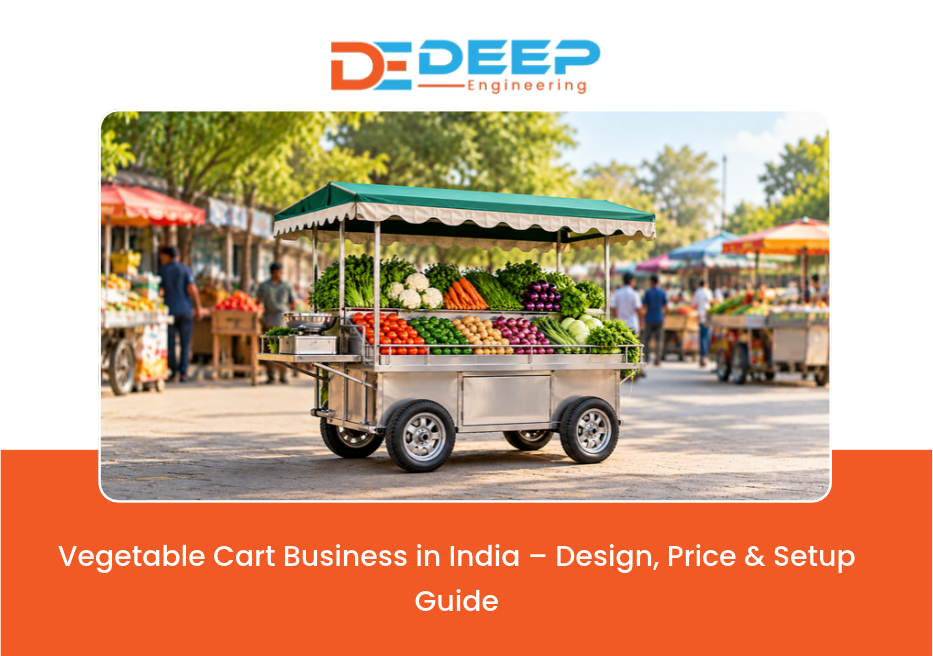
Starting a vegetable-selling business is a practical option for entrepreneurs who want to serve customers in residential neighborhoods, local markets, and busy commercial areas. Imagine a vendor in Ahmedabad selling fresh tomatoes, potatoes, onions, and seasonal vegetables from a well-organized Vegetable Cart. With suitable storage, sturdy wheels, and an attractive display, the vendor can manage stock efficiently and serve customers more conveniently.
However, choosing the right Food Cart requires more than comparing prices. Its material, dimensions, mobility, weather protection, and maintenance requirements can influence everyday operations.
This guide explores vegetable cart design, estimated prices in India for 2026, startup investment, potential profit margins, hygiene practices, and important purchasing considerations. It also explains how to approach a manufacturer for a customized cart that suits your budget and business requirements.
What Is a Vegetable Cart and Why Start This Business in India?
A Vegetable Cart is a mobile or stationary vending unit designed to display, transport, and sell fresh vegetables. It typically features a sturdy frame, wheels, produce compartments, and optional storage or weather protection. Vendors use these carts in residential neighborhoods, street markets, and designated vending areas.
A mobile vegetable business can be attractive because it does not necessarily require renting a permanent retail shop.
Its potential advantages include:
- Lower initial infrastructure costs than many conventional shops.
- Flexibility to serve customers in permitted vending locations.
- Opportunities to sell seasonal and locally sourced produce.
- Direct interaction with customers and the ability to build repeat business.
For example, a vendor may serve a residential area in the morning and a designated evening market later in the day, subject to local permissions.
Business performance depends on customer demand, competition, wholesale prices, spoilage, and operating expenses.
Different Types of Vegetable Carts Available in India
Choosing a suitable vegetable cart depends on your budget, selling location, daily inventory, and mobility requirements.
1. Traditional Wooden Vegetable Cart
Wooden carts are commonly associated with traditional Indian street markets. They generally feature a wooden platform supported by a metal frame and wheels.
They can be economical, but exposed wooden surfaces may absorb moisture and require additional maintenance. Buyers should inspect the frame, joints, wheels, and surface finish.
2. Mild Steel Vegetable Push Cart
A mild steel push cart for vegetables offers a sturdy frame and considerable design flexibility.
It can accommodate removable crates, display shelves, and a weighing-scale platform. Protective coatings and regular maintenance are important because exposed mild steel can corrode.
3. Stainless Steel Vegetable Cart

A stainless steel vegetable cart is suitable for buyers who prioritize cleanable surfaces, professional presentation, and corrosion resistance.
Material grade, sheet thickness, fabrication quality, and wheel capacity affect its performance and purchase price.
Buyers exploring other stainless steel vending equipment can also examine a Stainless steel food cart to understand different construction and layout possibilities.
4. Mobile Vegetable Cart With Storage
A mobile vegetable cart with storage combines produce-display space with compartments for additional inventory, packaging materials, and weighing equipment.
It is particularly useful for vendors who move between permitted selling locations.
5. Fruit and Vegetable Display Cart
A fruit and vegetable cart can accommodate different produce categories through separate trays, baskets, or removable crates.
For example, delicate fruits can be displayed separately from heavier potatoes and onions to reduce crushing.
6. Custom Vegetable Cart for Street Vendors
A customized cart can incorporate specific dimensions, shelves, storage compartments, wheel arrangements, a canopy, and branding.
Buyers can explore different Food Cart Design ideas before preparing their specifications.
What Is the Best Vegetable Cart Design for Street Vendors?
The best vegetable cart design for street vendors is one that balances easy movement, accessible produce displays, adequate storage, weather protection, and straightforward cleaning. Its dimensions should suit the permitted selling location, expected inventory, and the vendor’s physical handling requirements.

Organized display and storage
Use ventilated, removable crates to separate produce. Place frequently purchased vegetables within easy reach and reserve accessible storage for additional stock.

Wheels and maneuverability
Select wheels according to the cart’s loaded weight and local road conditions. Brakes or suitable wheel-locking arrangements help stabilize the cart while selling.
Weather protection
A suitable canopy protects produce from direct sunlight and light rain. Ensure the canopy is stable, adequately ventilated, and does not obstruct pedestrian movement.
An appropriate working height reduces unnecessary bending and makes it easier for customers to inspect vegetables. Smooth surfaces, rounded edges, and removable trays simplify routine cleaning.
A small platform for a weighing scale, a visible UPI QR code, and optional business branding can improve the customer experience.
Buying tip: Before ordering, measure your intended vending space and estimate the maximum loaded weight. Request a design drawing showing dimensions, storage, wheels, and canopy arrangements.
Vegetable Cart Price in India – Estimated Costs in 2026
Vegetable cart prices vary considerably according to construction material, size, fabrication quality, wheel specifications, and customization.
The following figures are illustrative budgeting ranges, not verified nationwide market averages or official Deep Engineering prices. One publicly listed Ahmedabad stainless steel vegetable trolley, for example, was advertised at ₹20,000, although its dimensions and intended load may differ from those of a full vending cart.
Nand Equipment Pvt. Ltd.
| Vegetable cart type | Illustrative price | Main features | Suitable buyers |
|---|---|---|---|
| Traditional wooden | ₹8,000–₹18,000 | Basic display platform | Budget-conscious vendors |
| Mild steel push cart | ₹15,000–₹30,000 | Metal frame, optional shelves | Daily street vendors |
| Stainless steel | ₹20,000–₹50,000 | Cleanable metal surfaces | Vendors seeking easier maintenance |
| Mobile cart with storage | ₹25,000–₹60,000 | Additional compartments, improved mobility | Residential-area vendors |
| Customized vegetable cart | ₹35,000–₹80,000+ | Tailored layout, canopy and branding | Entrepreneurs with specific requirements |
Illustrative planning estimates only. Obtain current written quotations from local suppliers before purchasing.
Cart size, wheel quality, storage compartments, finishing, weather protection, and material specifications can substantially change the final quotation.
For a customized purchase, ask the manufacturer to itemize fabrication, accessories, taxes, transportation, and any installation charges.
Stainless Steel vs Wooden Vegetable Cart – Which Features Should Buyers Compare?
| Feature | Wooden cart | Stainless steel cart |
|---|---|---|
| Initial cost | Often lower | Generally higher |
| Durability | Depends on timber and construction | Depends on steel grade and fabrication |
| Maintenance | May need sealing and repairs | Requires cleaning and joint inspection |
| Hygiene | Porous surfaces need extra attention | Smooth surfaces are generally easier to clean |
| Weight | Depends on wood and frame | Depends on steel thickness and design |
| Weather resistance | Needs moisture protection | Better corrosion resistance with suitable grades |
| Appearance | Traditional market style | Contemporary professional finish |
| Long-term suitability | Suitable with proper maintenance | Suitable for frequent cleaning and daily use |
A wooden cart may suit a vendor with a limited budget and a sheltered selling location. A stainless steel cart may be more appropriate when frequent cleaning, wet produce handling, and long-term presentation are priorities.
Neither material automatically guarantees a better return on investment. Construction quality and maintenance matter.
How to Start a Vegetable Selling Cart Business in India
1. Research local demand
Visit nearby markets and residential neighborhoods. Observe customer preferences, competitors’ prices, peak shopping hours, and demand for seasonal vegetables.
2. Select a permitted location
Contact the relevant municipal authority or Town Vending Committee about designated vending areas, certificates, and applicable restrictions.
3. Prepare your budget
Account for the cart, opening inventory, weighing equipment, packaging, transport, and working capital.
4. Choose the cart design
Compare materials, storage capacity, display height, wheel durability, and weather protection. A compact cart may suit narrow permitted spaces, while a larger unit may accommodate more inventory.
5. Find dependable suppliers
Compare wholesale markets, local farmers, and produce distributors. Evaluate quality, transport costs, payment terms, and seasonal availability.
6. Check permissions and food-safety requirements
Confirm applicable street-vending rules and FSSAI registration or licensing requirements. The 2026 FSSAI amendment provides deemed FSSAI registration for qualifying vendors registered under the Street Vendors Act, subject to applicable hygiene requirements.
7. Arrange payment facilities
Display a UPI QR code and keep suitable change for cash customers. Use an appropriate weighing scale and verify applicable legal-metrology requirements.
8. Plan produce handling
Use clean crates, protect vegetables from direct sunlight, and establish a safe cleaning routine. A vegetable washing machine may help larger operations but is unnecessary for many small vendors.
9. Manage pricing and inventory
Record purchase costs, transport expenses, selling prices, and unsold stock. Adjust purchasing quantities according to demand and seasonality.
10. Launch and measure results
Start with a manageable selection of popular vegetables. Review daily sales, wastage, customer feedback, and actual operating profit before expanding.
Vegetable Cart Business Cost and Profit Margin in India
A realistic startup budget should cover both equipment and the money needed to purchase fresh produce repeatedly.
Illustrative startup investment
| Expense | Estimated amount |
|---|---|
| Vegetable cart | ₹25,000 |
| Opening vegetable inventory | ₹5,000 |
| Weighing scale | ₹2,000 |
| Crates and baskets | ₹2,000 |
| Packaging supplies | ₹1,000 |
| Canopy | ₹3,000 |
| Initial transportation | ₹1,500 |
| Working capital reserve | ₹10,000 |
| Total | ₹49,500 |
These figures are hypothetical planning assumptions. Actual investment depends on location, cart specifications, wholesale rates, and inventory requirements.
Example of daily vegetable cart earnings
Illustrative daily scenario
Assuming all figures below reflect one trading day.
| Daily sales | ₹5,000 |
| Cost of vegetables sold | −₹3,500 |
| Gross profit | ₹1,500 |
| Spoilage and unsold-stock losses | −₹200 |
| Transportation | −₹150 |
| Packaging and other expenses | −₹100 |
| Other daily operating costs | −₹150 |
Estimated daily net operating profit
₹900
Gross margin: 30% · Net operating margin: 18%
The example excludes the owner’s labor, taxes, loan interest, and equipment depreciation. It is not a prediction of actual earnings.
How to Keep Vegetables Fresh and Reduce Daily Wastage
Freshness is essential for customer satisfaction and inventory management.
Separate delicate leafy vegetables from heavy produce. Use ventilated crates, keep vegetables away from direct sunlight, and avoid overfilling display compartments.
Rotate older stock first, remove damaged produce promptly, and maintain clean handling surfaces. Use potable water where washing is appropriate, and avoid leaving washed produce in conditions that encourage deterioration.
During hot weather, prioritize shade and suitable temperature management. In the monsoon, protect stock from rainwater while maintaining ventilation.
Recording daily wastage helps vendors identify which vegetables to purchase in smaller quantities.
How to Choose a Reliable Vegetable Cart Manufacturer in India
A reliable manufacturer should provide clear information about materials, dimensions, fabrication, load capacity, customization, and pricing.
When comparing Food Cart Manufacturers, consider their previous projects, product photographs, construction quality, and willingness to discuss individual requirements.
Request a detailed quotation covering the frame material, surface finish, wheel specifications, storage layout, canopy, manufacturing timeline, applicable taxes, and transportation charges.
You can also compare food carts for sale to understand available vending-equipment configurations.
Ask about maintenance, replacement parts, after-sales support, and any applicable warranty before placing an order.
Ready to plan your cart? Prepare your preferred dimensions, material, storage requirements, budget, and delivery location before contacting a manufacturer. This makes it easier to compare quotations accurately.
Deep Engineering Food Cart Manufacturer – Custom Cart Solutions
Deep Engineering Food Cart Manufacturer, based in Ahmedabad, Gujarat, manufactures food carts and other vending equipment for entrepreneurs and small businesses.
Its product range includes multipurpose carts, mobile food vans, kiosks, and equipment for different street-food businesses.
Buyers interested in vegetable vending can discuss their proposed requirements with the Food Cart Manufacturer, including construction materials, storage arrangements, mobility, and display layout.
Customers exploring a larger mobile business can also review the company’s Food Van options and compare food van price information. A vehicle-based setup is an alternative business model, not a requirement for vegetable selling.
The company’s available Food Cart range provides additional examples of vending equipment. Confirm whether your proposed vegetable cart design can be manufactured before ordering.
Where Can You Buy a Vegetable Cart in Gujarat and Across India?
Buyers in Ahmedabad, Rajkot, Surat, Vadodara, Bhavnagar, and Himmatnagar can compare local fabricators with established Food Cart Manufacturer in India options.
Entrepreneurs in Jaipur and other parts of Rajasthan, Indore and Madhya Pradesh, Delhi NCR, Gurugram, and Uttar Pradesh can also request remote quotations.
Before purchasing from another city, confirm manufacturing specifications, delivery availability, transportation charges, payment terms, and the process for resolving damage during transit.
Common Mistakes to Avoid When Buying a Vegetable Cart
- Choosing an unsuitable size: Measure the vending location and assess your daily inventory before selecting cart dimensions.
- Ignoring wheel quality: Poor wheels can make a fully loaded cart difficult to move and increase maintenance costs.
- Insufficient storage: A cluttered display makes stock handling and inventory rotation more difficult.
- Inadequate weather protection: Rain and direct sunlight can damage produce and disrupt daily sales.
- Difficult-to-clean surfaces: Avoid inaccessible corners, rough finishes, and layouts that trap dirt.
- Overlooking permissions: Check municipal vending rules before investing in equipment.
- Ignoring maintenance costs: Consider the availability and replacement cost of wheels, brakes, canopy components, and other parts.
If you later diversify into prepared food, equipment such as a Waffle Cart, Panipuri Cart, Momo cart, Fast food stall, or pan counter may be relevant to a separate business expansion.
FAQs
For initial budgeting, illustrative prices range from approximately ₹8,000 for basic wooden carts to ₹80,000 or more for customized units. Actual prices depend on specifications, materials, and the supplier’s current quotation.
Wood, mild steel, and stainless steel can all be suitable. Compare purchase cost, weight, cleaning requirements, weather resistance, and expected maintenance before choosing.
The illustrative budget in this guide totals ₹49,500, including a cart, initial inventory, equipment, and working capital. Your actual startup investment may be higher or lower.
Daily profit varies with sales, wholesale costs, wastage, transportation, and other expenses. The hypothetical example above produces ₹900 in daily operating profit before the owner’s labor, taxes, interest, and depreciation.
A practical design combines sturdy wheels, ventilated produce compartments, removable crates, weather protection, accessible storage, and easy-to-clean surfaces.
Requirements depend on your location, vending arrangements, and business classification. Check with your municipal authority or Town Vending Committee and confirm applicable FSSAI requirements. Qualifying vendors registered under the Street Vendors Act may receive deemed FSSAI registration under the 2026 amendment.
Stainless steel carts can be designed with customized dimensions, storage compartments, shelves, wheels, and canopies. Confirm the manufacturer’s fabrication capabilities and obtain written specifications.
Conclusion – Start Your Vegetable Cart Business With the Right Setup
Starting a vegetable cart business in India requires careful planning, dependable produce suppliers, a suitable vending location, and equipment that supports efficient daily operations.
Compare vegetable cart designs, prepare a realistic investment budget, and evaluate material quality, mobility, storage, and weather protection before purchasing.
If you are considering a customized setup, explore Deep Engineering’s vending-equipment range and request a quotation based on your preferred dimensions, construction material, storage needs, budget, and delivery location.